


Main Navigation
Main Content
Bachelor of Science in Environmental Engineering
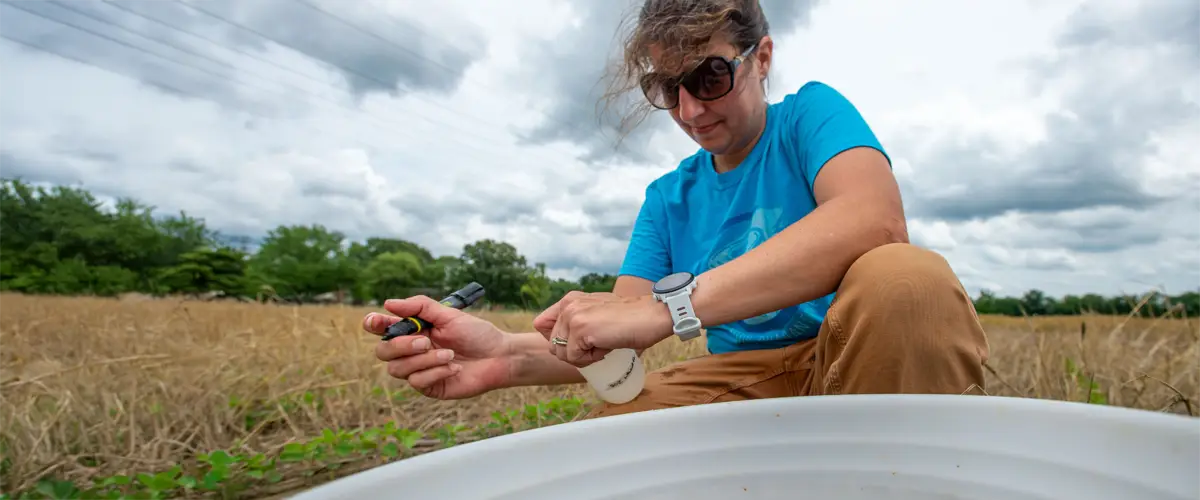
The Bachelor of Science in Environmental Engineering program prepares you to design solutions that protect human health and the environment. You’ll build a strong foundation in math, science, and engineering principles while learning how to address today’s most pressing environmental challenges from water and wastewater treatment to air quality control, waste management, and sustainable design.
As the only Environmental Engineering bachelor’s degree in Southern Illinois, this program offers a personal, hands-on educational experience. You’ll work directly with expert faculty, participate in real-world projects, and develop the technical and leadership skills needed for a successful career in environmental protection, sustainability, and infrastructure design.
Degree Requirements
The Environmental Engineering degree program is accomplished by fulfilling the requirements for the Bachelor of Science degree.
- Total Degree Requirements: 127 credit hours
- University Core Curriculum: 39 credit hours
- Major Requirements: 88 credit hours
 View all related undergraduate courses and Curricular Guide
Hands-On Learning
You’ll gain experience that goes far beyond the classroom. From your first year, you’ll be actively engaged in field and lab work, collecting water samples, testing soil, designing treatment systems, and analyzing environmental data. Your courses are designed to connect theory to practice, giving you the chance to apply engineering principles to real environmental problems.
Throughout your studies, you’ll work on projects in areas such as water and wastewater treatment, solid and hazardous waste management, air pollution control, and environmental modeling and remediation. The program concludes with a senior design project, where you and your classmates tackle a real-world environmental challenge provided by members of the Professional Advisory Board (PAB), a group of industry experts who guide and evaluate your work. This experience allows you to showcase your technical skills, creativity, and teamwork before stepping into the professional world.
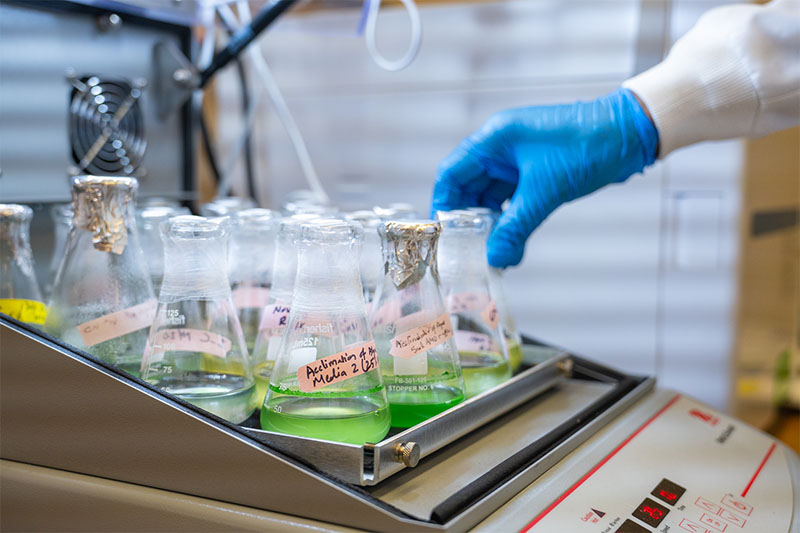
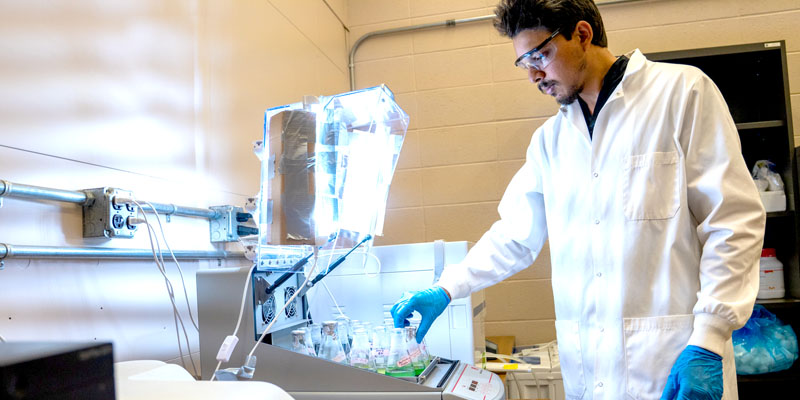
You’ll gain hands-on experience using advanced equipment such as ICP-MS, GC-MS, TOC analyzers, and mercury analyzers, preparing you for professional lab and field environments.
Facilities and Resources
You’ll learn in state-of-the-art teaching and research laboratories, including:
-
Environmental Engineering Lab: for water and wastewater analysis
-
Soil Mechanics and Fluid Mechanics Labs: for testing and modeling natural systems
-
Civil/Environmental Computer Labs: featuring ArcGIS, MATLAB, AutoCAD, and EPANET software
Research Opportunities
You’ll have the opportunity to participate in faculty-led research projects and the REACH undergraduate research program. Current projects include:
- PFAS and contaminant remediation
- Harmful algal bloom mitigation
- Microplastics and nutrient recovery
- Renewable energy production and sustainable design
- Environmental monitoring and modeling
You can present your findings at the Mid-America Environmental Engineering Conference or the annual Undergraduate Research Forum, building your communication and professional skills.
Career Opportunities
Typical employers include public agencies, municipalities, consulting firms, and environmental technology companies. Median salaries for environmental engineers range from $73,500–$108,500, depending on specialization and location.
As a graduate of this program, you’ll be prepared for careers in:
- Environmental and civil engineering consulting
- Water and wastewater treatment
- Air pollution control
- Hazardous waste management
- Stormwater and infrastructure design
- Environmental restoration and sustainability
Student Organizations
You can expand your learning and professional network through organizations such as:
- American Society of Civil Engineers (ASCE)
- Engineers Without Borders
- Society of Women Engineers (SWE)
- Tau Beta Pi – Epsilon Chapter
These groups offer valuable opportunities for leadership, service, and hands-on collaboration.
Contact Information
Prabir Kolay
Program Director
Engineering A 108A
1230 Lincoln Dr
Carbondale, IL 62901
618-453-7843
pkolay@siu.edu
Jack Young,
Academic Advisor
Engineering D104
1230 Lincoln Drive MC 6603
Carbondale, IL 62901
618-453-2261
jack.young@siu.edu