



Main Navigation
Main Content
Joseph Wager
Joseph Wager, Assistant Professor
Spanish
My primary research project explores the relationship between aesthetics and legal consciousness, or how law is navigated in daily life, to chart the rise of (enforced) disappearance under democracies. My book manuscript, Enforced Affinities: Disappearability and the Juridical Aesthetics of the Search in the Américas, places Colombia and Mexico, the two countries with the highest levels of disappearance in the region, into conversation with Argentina, Chile, El Salvador, Guatemala, and the US to rework the paradigm of dictators’ disappearances and trace how societies grapple with democracies’ disappearances. My scholarship has two self-reinforcing aims: a) to contribute to anticolonial epistemic paradigms and b) to make me a more effective teacher and mentor. Guided by an ethos of celebrating community cultural wealth, I bring teaching experience in the US and Latin America, having developed new curricula for Introducción a la literatura at the Universidad Nacional de Colombia, introductory through advanced language courses and literature surveys at Stanford University, as well as an innovative syllabi on sound studies and Latinx Literary Cultures at Southern Illinois University.
My book project emphasizes the overwhelmingly gendered labor of the search for the disappeared in literary works, films, multimedia interventions, and performances (for instance, see several short pieces on (enforced) disappearance in Spanish for a Mexican cultural journal: https://estepais.com/tendencias_y_opiniones/desaparicion/)
To analyze the structural threat that necessitates buscadoras’ resistance, I advance the concept of disappearability, a conceptual framework and critical analytic that reveals how the threat of vanishing shapes subjectivities amid democratic contexts such as Colombia and Mexico. This work anchors several scholarly and curatorial outputs, including peer-reviewed articles and a digital initiative (e.g., an article based on the first chapter, forthcoming in Hispanic Review, looks at the film Sin señas particulares). This research is interwoven with a collaborative project, the Mapping Absence digital platform (https://www.mappingabsence.com/), which grew out of a multiday symposium on disappearance in art, law, and social science that I organized in May 2025. As one of the platform’s curators, I solicit and generate new content for an interdisciplinary network of over thirty searchers, scholars, poets, lawyers, and filmmakers. Part of this symposium will also become a coedited special issue for the journal ARIEL (for which I am also contributing an article).
These projects attest to my commitment to advancing law and humanities from a Global South frame. In that vein, I have recently published a coedited special journal issue that critically analyzes the couplet “legal culture” (https://shc.stanford.edu/arcade/publications/occasion/anticolonial-interventions-legal-culture-global-south-art-and) and a coauthored article on Wayuu thought and windfarming that examines the relationship between development, geopolitics, and socio-environmental conflict through the lens of legal consciousness. Over the next few years, I will continue this work by developing a second book project that explores the relationship between the Inter-American Human Rights System and cultural production.
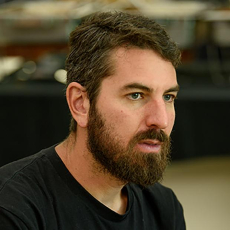 Faner Hall 3026
Education:
- PhD, Iberian and Latin American Cultures (Stanford University)
- MA, Estudios literarios (Universidad Nacional de Colombia)
- BA, Rhetoric (UC Berkeley)